


Loan origination has a simple equation:
Every extra day of turnaround time (TAT) increases operational cost, fraud exposure, and customer anxiety.
Every extra step in the journey increases drop offs.
In the UK, that friction is not theoretical. In a UK borrower survey, 22% of 18 to 34 year olds said they abandoned a loan application and used a different lender because the process was too cumbersome.
So the question is not “how do we digitise lending?”. Most lenders already did.
The question is:
How do we remove bottlenecks without lowering the bar on compliance, auditability, and customer outcomes (Consumer Duty)?
This is where secure, workflow based video interactions can materially improve both loan TAT and completion rates.
What actually drives loan TAT and drop offs
The root causes of slow TAT
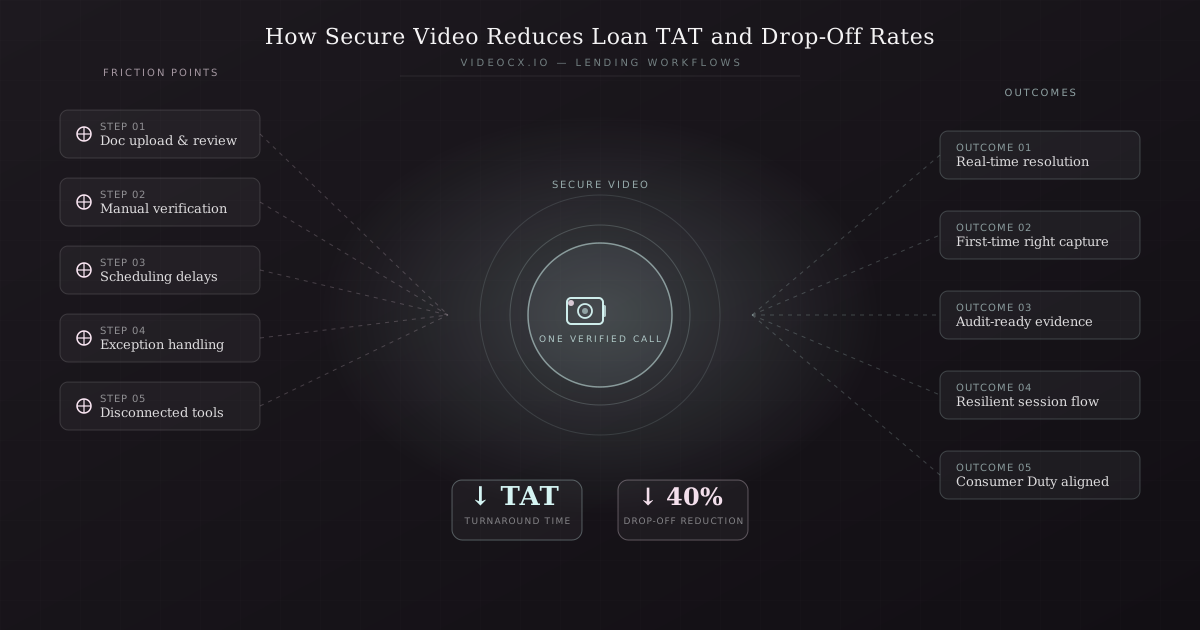
Across UK lenders, the biggest TAT killers tend to cluster around:
- Back and forth for documents (missing pages, unclear photos, wrong format)
- Manual checks that require rework (mismatched data, low confidence verification)
- Scheduling delays for verification and PD style conversations
- Exception handling (edge cases that do not fit the happy path)
- Disconnected tools (LOS, IDV vendor, ops queues, call centre)
The root causes of drop offs
Drop offs happen when customers hit any of these:
- “I do not know what to do next”
- “This is taking too long”
- “I have to print, scan, or post something”
- “I got stuck and nobody helped me”
- “I do not trust this process”
This is why “fully self serve onboarding only” often fails at scale for credit journeys. A portion of customers need a fast assisted lane.
McKinsey has highlighted that integrating remote assist into onboarding can significantly reduce drop offs. In one example, a digital lender improved its assist infrastructure and reduced application drop offs by up to 40%.
Why secure video helps, specifically for loans
Video is not just “a call”. In lending, the real value is:
- Real time resolution of exceptions (one interaction instead of many follow ups)
- Higher first time right document capture and checks
- Audit ready evidence (recordings, tagged documents, structured outcomes)
- A human trust layer for high value or high risk decisions
This combination reduces TAT while also reducing drop offs.
What VideoCX.io changes in the loan workflow
VideoCX.io is built around workflow driven secure video banking journeys used for onboarding, servicing, and credit verification.
For lending journeys, two are especially relevant:
1) It collapses multiple touchpoints into one verified interaction
Instead of:
- customer uploads docs → ops reviews → asks for re upload → customer drops off
You can run: - guided video interaction → correct capture → confirm details live → submit complete case
That removes days of queue time and reduces the “silent abandonment” that happens between follow ups.
2) It creates a resilient assisted lane without restarting the journey
One practical reason journeys fail is: the call drops, the customer must restart, or the case context is lost.
VideoCX.io highlights chat based connection and session management, so if the video drops the session can remain active.
That is a direct drop off reducer.
3) It makes evidence collection structured, not ad hoc
In credit verification and PD workflows, lenders need:
- consistent question sets
- consistent document capture
- consistent disposition outcomes
- consistent audit evidence
UK lens: why this aligns with Consumer Duty expectations
The FCA’s Consumer Duty is explicit that firms must put customer needs first and deliver good outcomes.
The FCA has also published examples and expectations around the consumer support outcome,
including monitoring outcomes and fixing friction points.
If your loan journey causes avoidable delays, repeat requests, or unclear next steps, that is not just a conversion issue. It becomes a customer outcome issue.
A secure video assisted lane helps because it:
- reduces avoidable repeats
- makes support immediate at the point of friction
- improves clarity through guided interactions
- gives better evidence of what happened, when, and why
TAT to Trust Loop
Step 1: Remove waiting
Replace multi day backlogs with an assisted verification slot or immediate routing.
Step 2: Make the first interaction complete
Guided capture plus live confirmation reduces rework and re submission loops.
Step 3: Make exceptions fast, not fatal
When something fails, route to a human instantly, not a ticket queue.
Step 4: Keep the journey resilient
Prevent restarts. Preserve session context even if connectivity drops.
Step 5: Make it audit ready by design
Tag evidence, standardise questions, generate consistent outcomes.
VideoCX.io supports document capture and tagging in the video credit verification flow.
It also describes an audit style checker module capability for reviewing recordings and supporting artefacts in regulated workflows.
The result is fewer “ops ping pong” loops, which is one of the biggest contributors to TAT.