




Banking customers have changed their expectations faster than most operating models have changed to meet them. People want real help, quickly, without repeating themselves, and without being forced into a branch visit for things that can be handled safely online.
At the same time, banks face a tough reality: digital journeys still break at the moments that matter most. Mortgages, fraud concerns, account access issues, Support during loss, complaints, power of attorney, vulnerable customer support, and high value product decisions. These are human moments, and they need human reassurance.
Secure video interactions solve that gap. Not “video for the sake of video”, but video designed specifically for regulated banking journeys: compliant, auditable, secure, and integrated into your digital and contact centre stack.
This guide is a practical playbook for UK banks and building societies that want to improve customer experience using secure video, while staying aligned with regulatory expectations and operational reality.
Why secure video matters for UK banking CX right now
1) Customer experience is now a competitive battleground
Digital-first banks are winning on customer experience. In the CMA service-quality survey conducted by Ipsos, 81% of Chase UK customers said they would recommend the bank. That level of recommendation shows that customers value smooth journeys and quality support, not just pricing.
Traditional banks do not need to become “challenger banks” to compete, but they do need to reduce friction, improve outcomes, and add human support exactly where customers get stuck.
2) Video can reduce cost to serve while improving outcomes
Banks often assume “better service” must cost more. In practice, secure video can reduce repeat contacts, reduce time to resolution, and reduce avoidable escalation.
McKinsey notes that a successful virtual model can reduce cost to serve by 40–50%, while achieving customer satisfaction scores that can exceed in-person models.
That matters because CX is not just a brand conversation. It is an operating model conversation.
What “secure video interactions” should mean in banking
A consumer video meeting tool is not a secure video banking solution.
For banks, “secure video” typically implies:
- Strong identity and access controls (SSO for staff, secure customer authentication, secure session links)
- Encryption in transit and at rest, plus secure media handling
- Consent and transparency (clear notifications, recording controls, lawful basis, retention policies)
- Auditability (logs, timestamps, who joined, what was shared, outcome tracking)
- Data minimisation (only collect what is needed for the journey)
- Policy controls (where video is allowed, who can use it, and for what journeys)
It also means video is not isolated. It is integrated into the journey.
The 7 CX problems secure video solves in banking
1) “I’m stuck and I don’t know what to do next”
Customers abandon journeys when they hit uncertainty. Secure video lets a banker or specialist guide them in real time, without forcing a branch visit.
Where it works best:
- Mortgage application support
- Savings and ISA account setup for non-standard cases
- Business banking onboarding steps
- Dispute initiation and document clarification
2) “I have to repeat myself every time”
A major CX failure is channel resets: the customer starts in digital, then calls, then is told to visit a branch, then has to restart the story.
Secure video improves continuity when it is connected to:
- CRM case records
- Contact centre tickets
- Digital journey context (where they got stuck)
3) “I need a real person for this”
Some moments require empathy and trust, not automation.
Best-fit journeys:
- Vulnerable customer support
- Support after a loss and authorised account access
- Fraud concerns and scam prevention conversations
- Complaints handling where clarity matters
4) “I don’t trust what I’m seeing online”
When money is involved, customers want reassurance that:
- they are speaking to the right person
- the advice or guidance is legitimate
- they can ask questions and see human confidence
Secure video brings back the “face-to-face confidence” of a branch, but without branch dependency.
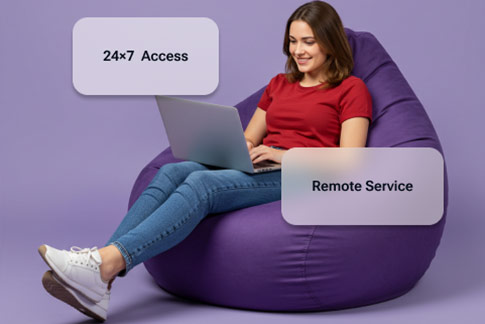
5) “The branch is not convenient”
This is not just about closing branches. It is about modern schedules.
Video helps offer:
- scheduled appointments with specialists
- extended service windows
- remote access for mobility-limited customers
6) “My case is urgent”
Secure video can shorten resolution time for cases like:
- account access restoration
- urgent card or payment issues
- high-risk fraud intervention calls
7) “I need help understanding documents”
Many banking interactions fail because customers do not understand what to provide, why they need to provide it, or how to provide it securely.
Video paired with:
- secure document capture
- secure file exchange
- Co-browsing
- Smart routing logic
- guided completion can reduce delays and rework.
The best banking use cases to launch first (fast ROI, low risk)
If you want early wins, start with journeys where:
- the customer is already requesting help
- the risk is manageable
- the volume is meaningful
- success is measurable
Use case 1: “Digital assist” for high-intent journeys
Add a “Talk to a specialist on secure video” option inside:
- mortgage pages
- savings onboarding flows
- business account journeys
- high value product sign-up flows
Goal: reduce abandonment and reduce inbound calls.
Use case 2: Secure video appointments for complex servicing
Examples:
- disputes and chargebacks explanation
- account access recovery support
- complex mandate changes for business banking
Goal: improve first-contact resolution, reduce repeat contacts.
Use case 3: Vulnerable customer support
Secure video supports clarity, empathy, and better outcomes, especially when paired with a consistent service workflow.
Goal: stronger outcomes, fewer complaints escalation.
Use case 4: Fraud prevention and scam intervention
A video-based interaction can be used to provide higher-assurance support, especially for customers in distress.
Goal: reduce authorised push payment scam losses and improve trust outcomes.
What great secure video servicing looks like
Here’s the model that works in real banking environments:
Step 1: Offer the right entry points
Use 3 entry modes:
- Instant video help (when customers are stuck)
- Scheduled video appointment (specialist time)
- Escalate to video from chat/voice (when complexity rises)
Step 2: Keep it frictionless for customers
Best practices:
- no app download required if possible
- minimal steps to join
- clear “what happens next” screen
- accessibility-first design
Step 3: Keep it controlled for compliance and operations
Best practices:
- role-based access for staff
- approved scripts and outcome logging
- recording rules based on use case
- escalation paths to voice or branch if needed
Step 4: Make it measurable
You should be able to report on:
- conversion lift in assisted journeys
- time to resolution
- repeat contact rate
- customer satisfaction outcomes
- complaint rates and root causes
Aligning Customer Experience with UK Regulatory Expectations
The FCA’s Consumer Duty sets a higher standard for consumer outcomes and requires firms to put customers’ needs first.
Secure video can support Consumer Duty outcomes when designed correctly, because it helps customers:
- understand products and processes
- complete journeys without avoidable harm or confusion
- access support in a way that suits their needs
Important point: video does not “automatically” make you compliant. Your controls, policies, and outcomes tracking do.
Implementation checklist: how to deploy secure video without chaos
1) Security and compliance foundations
- Define which journeys allow recording, and why
- Define retention periods and access controls for recordings and logs
- Ensure secure authentication, session security, and auditing
- Ensure staff are trained for video-specific handling (privacy, environment, disclosures)
2) Integration requirements (so it feels like one journey)
Minimum recommended integration points:
- CRM or case management (create and update cases automatically)
- Contact centre (routing, skills-based assignment, queue visibility)
- Digital channels (web, mobile, in-app messaging)
3) Operational model
- Build a “video specialist pool” first (do not force everyone into video on day one)
- Define staffing and scheduling rules
- Define escalation paths and service-level targets
4) Experience design
- Define the “moment of value” for each journey
- Use prompts that reduce anxiety:
- “We’ll guide you step by step”
- “No branch visit needed in most cases”
- “Secure session, designed for banking support”
- “We’ll guide you step by step”
The KPIs that prove secure video is improving CX
Track KPIs in three layers:
Customer outcomes
- Customer Satisfaction Score for assisted journeys
- complaint rate reduction for targeted journeys
- repeat contact reduction
Journey performance
- drop-off rate in assisted journeys
- time to resolution
- first-contact resolution
Operational efficiency
- average handle time for complex cases
- specialist utilisation
- reduction in branch appointments for service-only needs
Secure video interactions work best when they are purpose-built for regulated workflows, not bolted on as a generic meeting tool.
If you want secure video to genuinely improve CX for your institution, focus on:
- controlled, compliant deployments
- integration into journeys
- measurable outcomes
- scalable operations
That is the difference between “we added video” and “we improved customer experience”.
The real goal is better outcomes, not more channels
Secure video is not another channel to manage. It is a way to fix the moments where digital breaks and customers need human clarity.
Digital-first banks are winning on service perception, and UK customers are clearly rewarding better experience.
At the same time, strong virtual models can reduce cost to serve while improving satisfaction when implemented correctly.
For banks, secure video is one of the most practical ways to deliver both: stronger customer outcomes and a more efficient service model.