





Australian banking has already crossed the “digital is normal” threshold. The Australian Banking Association reports that digital banking interactions have grown by 70% since 2019.
But high-risk and high-stakes journeys do not behave like everyday digital journeys.
When the customer is higher risk (or the request is higher risk), banks and lenders face a familiar trade-off:
- Add controls – reduce fraud and compliance risk, but increase drop-offs and complaints
- Reduce friction – improve conversion and experience, but increase exposure to scams, impersonation, and disputes
Secure video banking changes that trade-off. Not as “video KYC” bolted onto onboarding, but as a controlled, recorded, policy-driven trust layer that can be used across:
- onboarding exceptions and enhanced checks
- high-risk servicing requests
- complex advice and assisted digital flows
- vulnerable customer support where clarity and consent matter
This is where video banking becomes a core operating capability, not a feature.
Why “high-risk” is expanding in Australia
High-risk is no longer a niche category reserved for a small number of accounts. It is growing because both customer profiles and threats have changed.
1) Scam and fraud pressure forces banks to verify more moments
Scam losses remain significant. Scamwatch’s combined data for 2024 shows total losses of $2.0 billion, with investment scams alone accounting for $945 million.
On the payments side, AusPayNet reports $868 million in card-related fraud in FY24. And its Australian Payment Fraud Report shows card-not-present fraud grew to $688 million in 2023, accounting for over 90% of all card fraud.
In practice, this pushes banks toward “verify before you act” policies for:
- payee changes and payment redirection risk
- high-value transfers
- credential compromise and account takeover signals
- device changes, SIM swap suspicion, and unusual activity
2) Digital usage grows, but “trust moments” still need a human layer
Even as digital interactions rise, Australians still require access to human support and face-to-face options, especially outside metro areas. The ABA notes Australia’s banks maintain a relatively dense branch footprint, complemented by Bank@Post’s 3,400+ outlets.
Video banking is the scalable way to deliver that “face-to-face” experience without forcing a branch visit.
3) AUSTRAC expects risk-based controls, not checkbox compliance
AUSTRAC is explicit that reporting entities must document how they identify and verify customers as part of their AML/CTF Program, and that they must be “reasonably satisfied” their identification procedures are effective.
AUSTRAC also requires organisations to undertake and maintain a money laundering and terrorism financing (ML/TF) risk assessment.
For high-risk customers or scenarios, the practical reality is:
- more evidence needs to be captured
- more steps require human judgement
- audit trails matter more
- the cost of “getting it wrong” is higher
Secure video supports this risk-based approach without turning every exception into a branch appointment.
Secure video banking, defined properly
Secure video banking is not “a video call with a banker.” It is a controlled interaction that produces verifiable outcomes.
A secure video banking interaction typically includes:
- Strong session entry controls (OTP or equivalent, device checks, customer authentication steps)
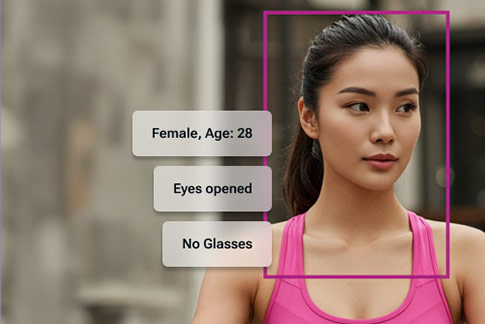
- Identity and document evidence capture (images, video snippets, metadata)
- Real-time human verification for exceptions and risk triggers
- Structured outcomes (approve, reject, refer, request more evidence)
- Audit-ready records (time stamps, agent ID, call logs, evidence bundle)
- Policy enforcement (what steps are mandatory for which risk level)
When designed this way, video becomes a reusable “trust control” across both onboarding and servicing.
Where secure video banking matters most for high-risk customers
1) Enhanced onboarding for higher-risk profiles, without branch friction
High-risk onboarding often involves customers who are legitimate but harder to verify through purely automated methods:
- complex income sources, cash-intensive industries, or unusual transaction patterns
- offshore links or multiple jurisdictions
- higher-risk products (certain lending types, higher limits, business accounts)
- customers triggering additional checks (PEP screening hits, adverse media, mismatched details)
Secure video helps by allowing an agent to resolve “why the automation failed” in real time, capture supporting evidence, and complete the case with defensible rationale.
Result: fewer “come to branch” outcomes, fewer abandoned applications, and cleaner audit records.
2) High-risk servicing requests where impersonation risk is high
In Australia’s scam environment, some servicing actions are inherently risky:
- adding or changing payees
- changing contact details and authentication factors
- increasing limits
- address or name changes
- large or unusual transfers
- disputes that require customer confirmation and context
Scamwatch data shows major losses across categories like payment redirection and phishing.
Secure video enables banks to introduce a higher-assurance step precisely when the risk is high, not for every routine interaction.
A well-designed model is “step-up verification”:
- low-risk request → normal digital servicing
- risk trigger → secure video session + evidence capture + approval workflow
3) Assisted digital support to prevent drop-offs in complex journeys
Complex product journeys fail digitally for predictable reasons:
- customers do not understand a form or disclosure
- document uploads fail
- they get stuck on one step and give up
- they do not trust what they are seeing
Video banking combined with guided assistance can reduce these failure points, especially when the bank needs to maintain control and proof of what was explained and accepted.
Some platforms such as Videocx.io provides co-browsing and guided completion as the experience layer. Secure video banking becomes more powerful when it is connected to that workflow and compliance outcome.
4) Vulnerable customers and high-stakes clarity
AUSTRAC explicitly discusses assisting customers who do not have standard forms of identification and recommends alternative identification and verification procedures to reduce barriers to access.
Secure video can support these scenarios by enabling:
- clearer explanations
- controlled evidence capture
- safer completion paths without repeated branch visits
A practical operating model: “Video banking as a risk-control layer”
To make secure video work for high-risk onboarding and servicing, the implementation needs an operating model, not just a tool.
Layer 1: Risk triggers (when video is required)
Define triggers aligned to your ML/TF risk assessment and fraud/scam controls. AUSTRAC expects ML/TF risk assessment discipline.
Examples:
- PEP or sanctions screening triggers
- mismatch between identity data sources
- device change + high-risk service request
- unusual payee / transfer patterns
- repeated failed authentication attempts
- account takeover indicators
Layer 2: Workflow design (what happens in video)
Create structured playbooks:
- questions to ask
- documents to capture
- liveness and verification steps
- escalation rules
- outcome codes
- maker-checker approvals where needed
Layer 3: Evidence and audit (what gets stored)
Decide what constitutes an “evidence pack”:
- recording or recording references
- ID images
- consent capture
- agent notes and decision rationale
- timestamps and metadata
- retention and access controls
Layer 4: Operational routing (who handles the call)
High-risk should route differently:
- skilled agents
- specialist queues
- language and availability logic
- load balancing during peaks
- fraud or compliance escalation options
This is where a video banking platform must behave like an operational system, not a generic meeting tool.
What to look for in a secure video banking platform
If you are evaluating platforms for Australian banks and lenders, these capabilities matter most in high-risk use cases:
- Policy-driven workflows (not just video calls)
- Evidence capture + audit trails designed for regulated operations
- Identity and document handling controls (what can be captured, how it is stored, who can access it)
- Maker-checker and escalation paths for high-risk decisions
- Queueing and routing logic to manage service levels and specialist handling
- Deployment flexibility and data residency considerations (for example, AWS Sydney region hosting is commonly preferred for Australian deployments)
- Integration-first architecture so video is embedded into journeys, not a side channel
The measurable outcomes banks should track
If video banking is being positioned as a risk-control layer, measure it like one:
Risk and compliance
- reduction in impersonation-related losses for step-up actions
- reduction in disputed servicing changes
- audit pass rates for evidence completeness
Operations
- average handling time (AHT) for exception cases
- recontact rate for complex requests
- queue performance and specialist utilisation
Experience
- completion rate for assisted journeys
- customer satisfaction for “high-friction” requests
- drop-off reduction where branch visits were previously mandated
And always compare against the baseline: what percentage of these cases previously became branch visits, complaints, or unresolved tickets.
High-risk journeys need high-trust servicing
In Australia, the centre of gravity is shifting:
- digital volumes are up materially
- scam and fraud pressure forces more verification at the moment of action
- AUSTRAC expects risk-based control design with documented procedures and ongoing risk assessment
Secure video banking is the practical bridge between speed and safety.
It enables banks and NBFC-style lenders (non-bank lenders and finance providers) to:
- onboard higher-risk customers without defaulting to branch-only handling
- service high-risk requests with defensible, recorded outcomes
- keep customers in digital journeys while adding the human assurance layer regulators and customers both trust
If you treat video as “just onboarding,” you underuse it.
If you treat secure video as a bank-wide trust layer, you get compounding value across onboarding, servicing, and risk operations.